
Prevention
Preventing head lice at home and at school
No product keeps lice away for good. A ten-minute weekly comb check and a few small habits do more than anything sold in a bottle — here is what we tell every family we visit.
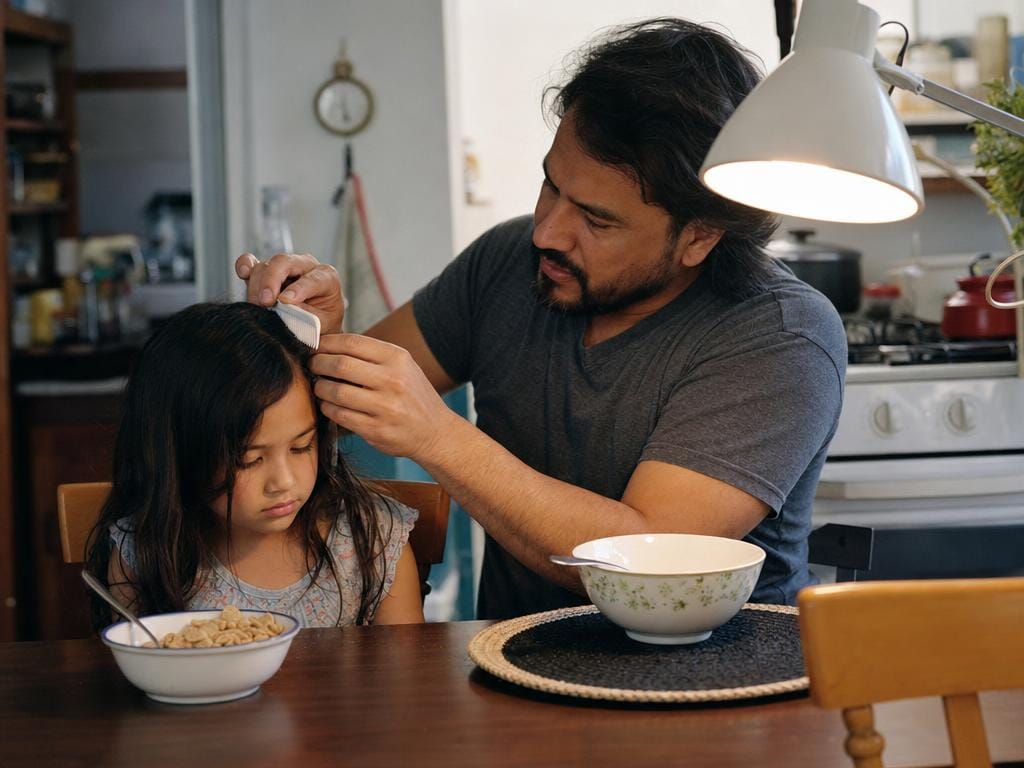
The habit that matters most
The weekly comb check
Most of the cases we treat got bad because nobody was looking. Ten minutes a week is enough to catch lice early, when they are easiest to deal with.
Work with wet hair and conditioner
Wet hair slows lice down, and conditioner lets the comb glide. Ordinary conditioner from the shower is fine — nothing special required.
Comb in sections, near good light
Sit by a window. Work a fine-toothed metal comb from scalp to ends, one section at a time, wiping the comb on a white paper towel between passes so you can see what comes out.
Check the usual hiding spots
Look closely behind the ears and along the nape of the neck. Nits are tiny, tear-shaped, and glued to the hair near the scalp. A fleck that flicks away easily is usually just dandruff — nits stay put.
Make it routine, not a big deal
Pick a night — many families do Sunday before the school week. Put on a show or hand your kid a book, and it is over before they notice.
School days
Wear it up, tied back
Lice spread through direct head-to-head contact, so the goal is simple: less loose hair brushing against other heads.
- Braids, buns, and ponytails beat loose hair. A braid tucked into a bun is the tidiest of all.
- A little gel or hairspray helps stray strands stay put.
- Teach kids to keep heads apart during selfies, shared tablets, and huddles — that contact is how lice actually travel, not the coat hook.
- During an outbreak at school, comb-check twice a week instead of once.
You will see mint and tea-tree “repellent” sprays at every pharmacy. The evidence behind them is thin. They smell nice and do no harm, but in our experience a tidy braid does more than anything in a bottle.

Fact and myth
What actually spreads lice — and what doesn't
Half of what parents hear about lice is folklore. Knowing the difference saves a lot of laundry and a lot of worry.
How lice really spread
- Direct head-to-head contact — sleepovers, cuddling, kids huddled over the same phone or book.
- Lice crawl. They cannot jump, fly, or swim, so heads have to touch, or very nearly.
- Sharing a brush or hat immediately after someone with lice used it carries a small risk — smaller than most parents assume.
What you can stop worrying about
- Pets. Head lice live only on human heads.
- Pools, classroom carpets, and coat hooks — spread this way is vanishingly rare.
- Off the head, a louse dies within a day or two, and eggs cannot hatch away from the warmth of the scalp.
- Cleanliness has nothing to do with it. Lice are just as happy in freshly washed hair.

After a case at home
If someone in the house was just treated: hot-wash bedding and anything worn in the past two days, give pillows and stuffed animals twenty minutes in a hot dryer, and soak combs and brushes in hot water. That is genuinely it — there is no need to fumigate the apartment or bag up toys for weeks.
If you comb up something you cannot identify, a professional head check settles it in one visit — and if we do find live lice, treatment can usually happen the same day.
Get in touch
Request a visit
Tell us a little about what's going on. During business hours we usually call back within fifteen minutes, and most visits can be scheduled for the same day.
Prefer to talk to someone now?
(347) 901-5247Sunday through Friday, 9am to 5pm. Closed Saturdays